
SP500 Analysis: Elliott Wave Flat Correction Sets Up Bullish Opportunity
Update (November 18):
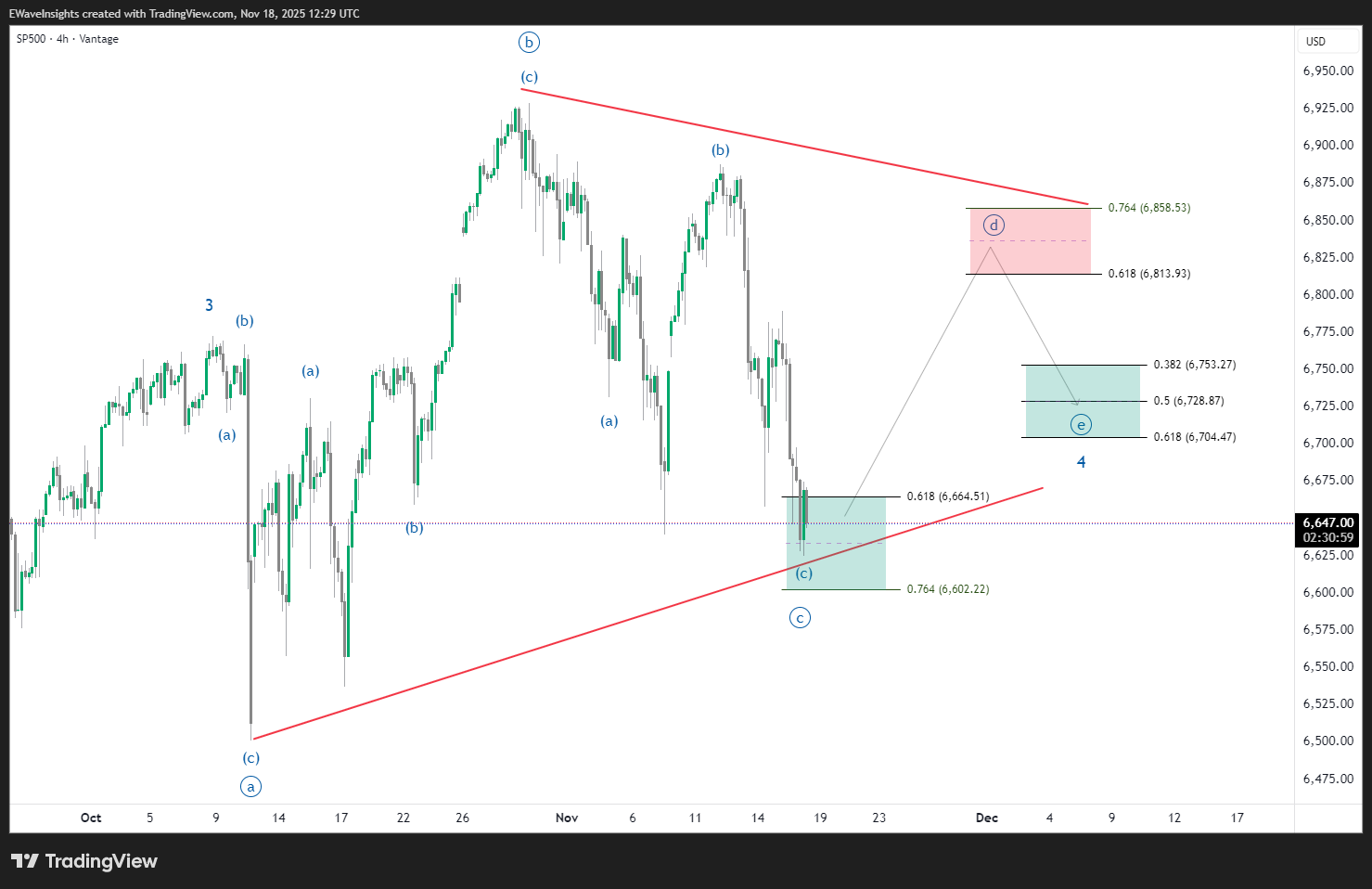
I’ve attached an updated chart for the ongoing SP500 analysis. Upon review, wave C was marked incorrectly in my previous post. Wave B actually formed an expanding flat, which shifted the structural context of the triangle. With wave C now potentially in place along the lower support boundary, the expectation is for further sideways consolidation as wave D develops—possibly extending throughout November.
Given that wave B unfolded as an expanding flat, the triangle remains the dominant scenario as long as price respects the established red trendlines. If wave D develops as expected, resistance is likely in the 6,814–6,858 region a potential area for a reversal or at least a pause in upward momentum. Should resistance hold, a rejection from this zone could set up a subsequent move lower into the primary wave E target zone below 6,753, as highlighted by the updated Fibonacci levels. This evolving pattern underscores the need to remain adaptive with Elliott Wave counts as new market evidence and price swings continue to emerge.
Previous Updates
Welcome to this week’s Monday Market Watchlist, your trusted source for actionable Elliott Wave technical analysis and market structure insights. This edition focuses on our SP500 analysis, which appears to have completed a classic Wave 2 flat correction and is setting up for a potential impulsive Wave 3 advance offering an ideal study in wave structure, Fibonacci confluence, and price action.
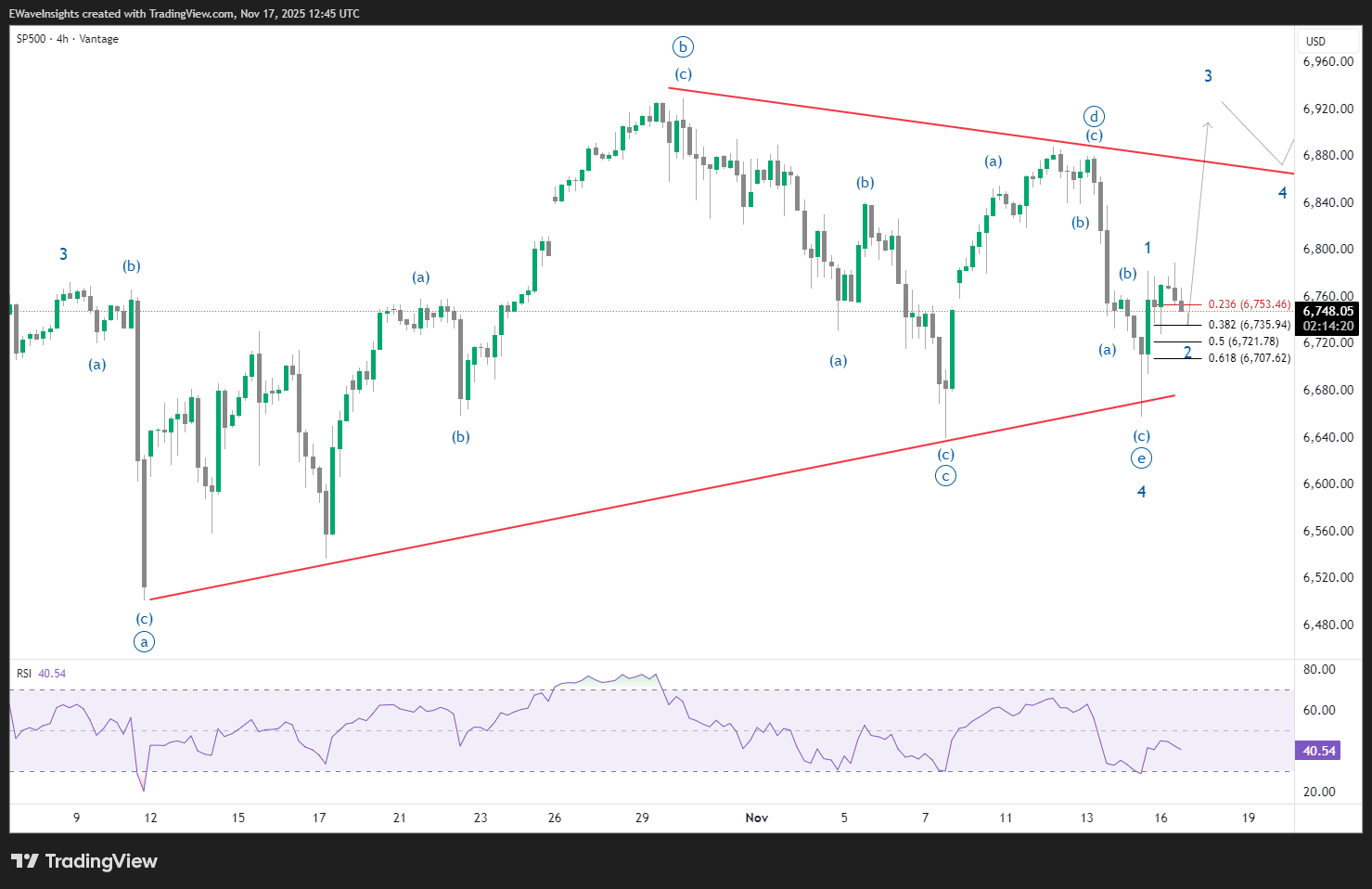
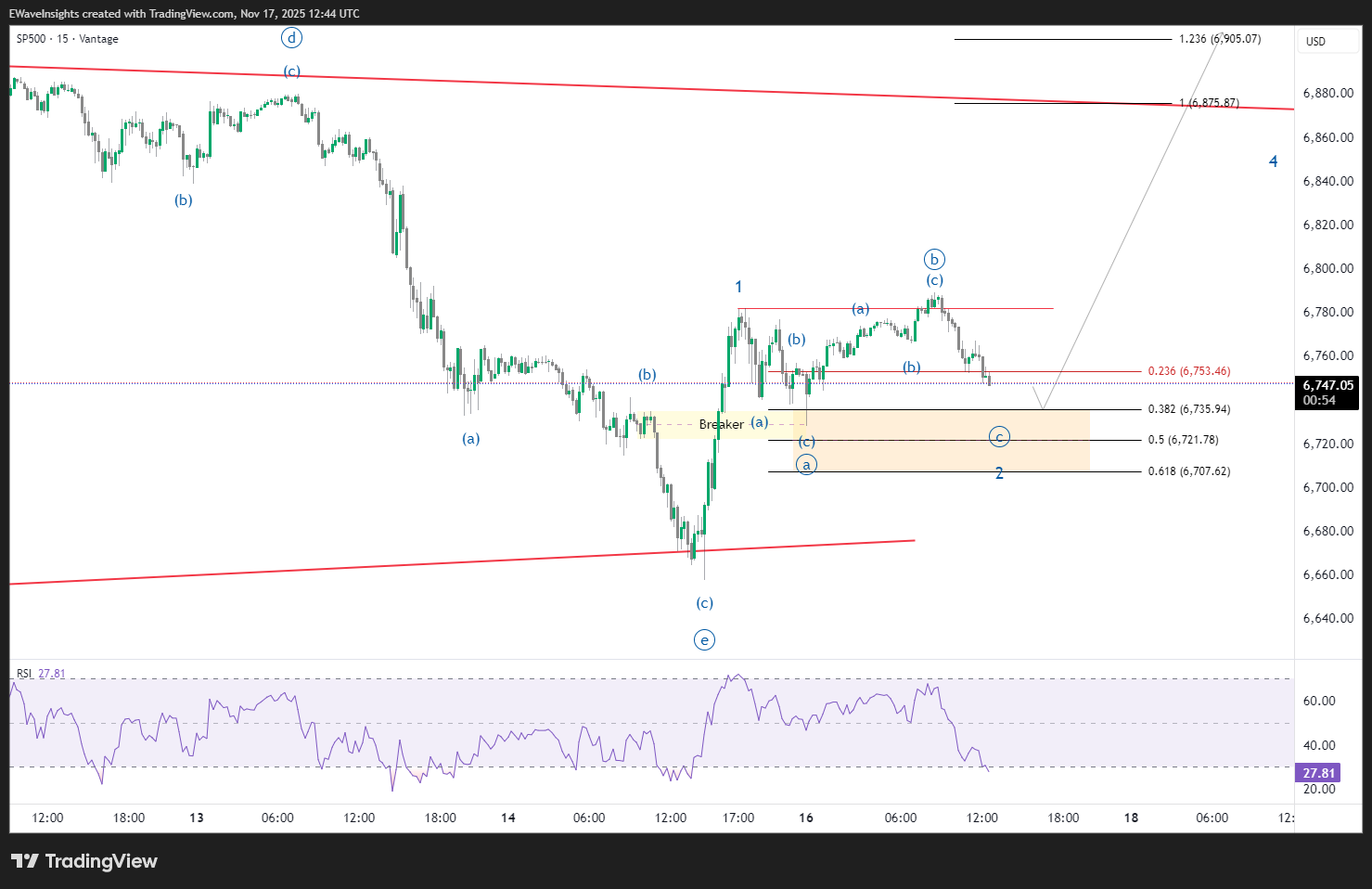
The SP500 has completed a triangle structure prior and is currently forming what looks like a flat correction pattern during Wave 2. Wave 2 unfolds as an overlapping ABC flat pattern, respecting multiple Fibonacci retracements (38.2%, 50%, 61.8%), which serve as critical support zones to watch. This aligns with Elliott Wave guidelines that allow Wave 2 to retrace deeply but typically not below the start of Wave 1.
Price action within this correction shows momentum holding above key Fibonacci support levels, setting the stage for a high-probability reversal. Early candlestick signals such as small-bodied candles and potential hammer patterns at these levels would provide additional confidence in the wave count.
If Wave 2 completes at these retracement zones, the market is poised to initiate Wave 3—a proxy for a strong, impulsive rally that often extends beyond Wave 1’s length by 1.618 times or more, according to Fibonacci extension principles. This offers a clear tactical trading opportunity for those monitoring momentum shift and confirmation signals.
SP500 4HR Chart
SP500 15Min Chart
Key Observations
- The Wave 2 correction appears as a textbook flat pattern incorporating an ABC structure, absorbing supply while respecting major technical support.
- Overlapping waves (a)-(b)-(c) fall within accepted guidelines, with retracements at 0.382, 0.5, and 0.618 Fibonacci levels providing a springboard for bulls.
- Momentum indicators such as RSI show tentative stabilization, suggesting that selling pressure may be waning and a reversal is possible.
- Confirmations in candlestick patterns near these retracement levels will be instrumental for trade entries targeting Wave 3.
- Watch for breach and hold above these retracement zones as confirmation of Wave 3 commencement and potential trend acceleration.
Tactical Takeaway
This setup exemplifies an ideal Elliott Wave flat correction concluding Wave 2 and directly feeds into the emerging impulsive Wave 3 structure. Elliott Wave traders should monitor price action closely for candlestick reversals that align with retracement support, using them as entry signals.
A recommended strategy is to enter on confirmation of reversal patterns above Fibonacci support, placing stops just below the start of Wave 2 to maintain risk control. Targets can be projected using Wave 1 distance extended by 1.618 Fibonacci multiples as Wave 3 tends to be the strongest impulsive wave in the sequence.
Stay tuned for continuous market updates as this structure evolves in real time leveraging the enduring synergy of Elliott Wave theory with risk management and candlestick analysis for tactical trading precision.